Transmission and Interconnection

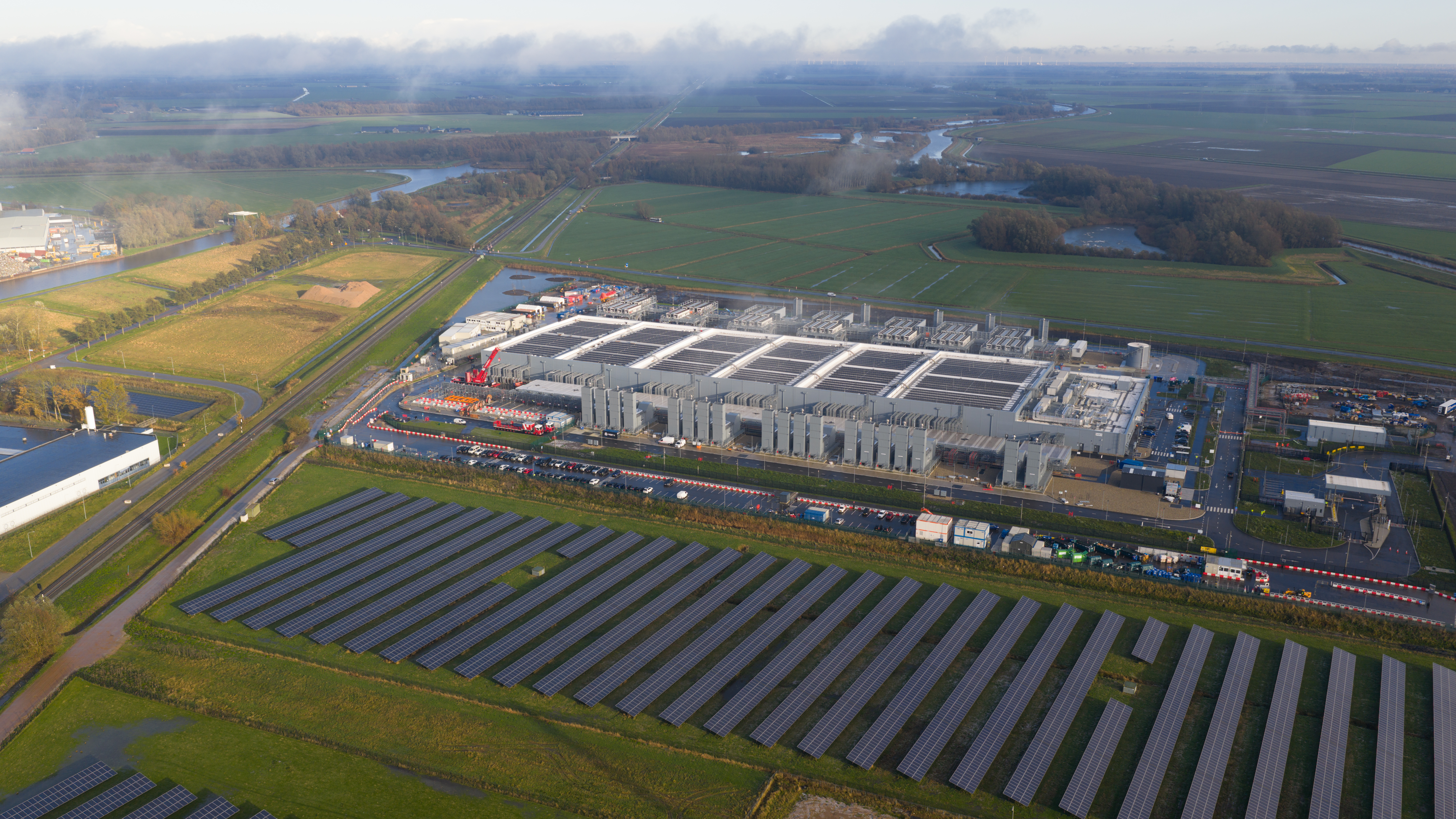
On January 14, 2026, the Federal Energy Regulatory Commission (FERC) accepted new rules proposed by Southwest Power Pool, Inc. (SPP) regarding the interconnection of High Impact Large Loads (HILLs) and the interconnection of new generation facilities that will be used to serve them, called High Impact Large Load Generation Assessment (HILLGA) in Docket No. ER26-247. This order, along with the recent order directing PJM Interconnection, L.L.C. (PJM) to propose rules for Co-Located generation and large loads, offer the first glimpse into how FERC will address the challenges facing the nation’s electricity grid. These include balancing resource adequacy, grid reliability, and fair cost allocation for any needed grid expansions to accommodate new AI-driven data centers.

Although the use of a shared facilities agreement (SFA) for co-located energy projects is not a new concept, their use has increased significantly in recent years due to the rise in co-located generation, storage, and load infrastructure, particularly in the case of data centers. In general, an SFA grants each party a co-tenancy ownership interest in certain shared facilities, subject to detailed management, operations, and cost-sharing provisions, among other considerations.

Given the increasing frequency of their use, owners, operators, financing parties, and developers should understand when, why, and how SFAs can (or should) be used to avoid potential regulatory, operational, or cost-allocation issues with co-located projects.

When the legendary writer John McPhee described a blind, over-the-shoulder basketball shot of the equally legendary Bill Bradley, he fixed on Bradley’s explanation of how he managed to score apparently without looking at the basket. Bradley simply said, “you develop a sense of where you are.” That ‘sense’ allowed him to accomplish his purpose with no immediate idea about how his goal would be affected by events around him.

Industry participants, watchers, and regulators might enquire where we are in the complex but seemingly endless process of modernizing the U.S. electric system. Is the current focus on streamlining regulatory approval processes for infrastructure development generally— and the siting and permitting of electric transmission in particular—a sign that it’s time for the easy stuff since the Rubik’s Cubes of access, planning, cost allocation, and accommodating new technology are approaching resolution? Will this in turn be followed by a surge in electric transmission grid expansion and market integration? Ironically, during the decade of debate over siting and permitting—while policymakers make corridor determinations, run steering committees, and manufacture procedural shortcuts—U.S. transmission construction has declined precipitously. Does this give confidence that we know where we are, where the grid is headed, and how the industry will get there?

On September 4, 2025, the Board of Directors of Southwest Power Pool (SPP), the regional transmission organization (RTO) responsible for much of the central United States, passed Revision Request 696 (RR 696), paving the way for SPP to propose that the Federal Energy Regulatory Commission (FERC) modify SPP’s Open Access Transmission Tariff (Tariff) to create a 90-day path to interconnection for large loads and supporting generation. SPP is expected to file this Tariff change proposal with FERC in the coming weeks. Pending FERC’s decision, SPP aims to administer one of the fastest interconnection study processes in the nation and allow expedited processing of new large loads on the SPP transmission system.

At its May 13, 2024 open meeting the Federal Energy Regulatory Commission (FERC) unanimously approved Order No. 1977,[1] which updates the process FERC uses when exercising its transmission siting authority under Section 216 of the Federal Power Act, as amended by the Infrastructure Investment and Jobs Act of 2021 (IIJA). 

At its May 13, 2024 open meeting, the Federal Energy Regulatory Commission (FERC) approved a groundbreaking final rule—Order No. 1920[1] —requiring public utilities to undertake new long-term regional transmission planning over a 20-year horizon and allocate the cost of selected transmission projects in a manner that corresponds to the benefits they provide. 

For one reason or another, not every parcel of land originally targeted for a renewable energy project is able to be included in a final site plan. Typically, developers try to secure private easements from contiguous landowners, but landowners are not always willing to execute easements.

As the cold weather season approaches, the Federal Energy Regulatory Commission (FERC) and the North American Electric Reliability Corporation (NERC) are taking action to prevent a repeat of the devastating electric power outages that rocked Texas and the Midwest at the beginning of this year.

In February 2021, electric power generators and millions of customers

On Friday, May 1, 2020, President Trump issued a new Executive Order (the Bulk-Power Order) to prohibit transactions within the U.S. for the acquisition or installation of certain “bulk-power system electric equipment” which is sourced from foreign adversaries. In the Bulk-Power Order, President Trump expressed a determination that “the unrestricted foreign supply of bulk-power system