Regulatory & Legislative

Regulated energy sector entities routinely submit confidential and proprietary business information to Texas state agencies, including the Railroad Commission (Texas’s incongruously named oil and gas regulator), the General Land Office, the Public Utility Commission, and the Electric Reliability Council of Texas  (“ERCOT”), often assuming it is “for regulators’ eyes only.” But Texas agencies have limited power to prevent the disclosure of information sought pursuant to the Public Information Act (“PIA”).
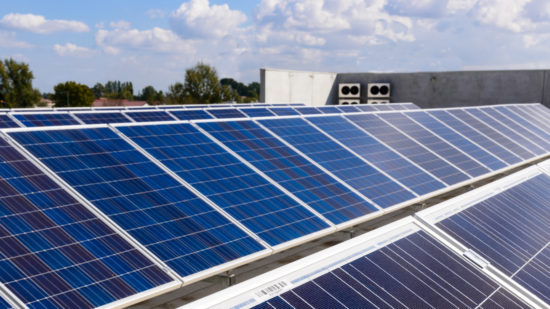
On November 3, 2022, the Internal Revenue Service (IRS) issued three notices (“November 3 Notices”) requesting public input on the climate and clean energy incentives contained in the Inflation Reduction Act (“IRA”). The November 3 Notices request comments by December 2, 2022, on the amendments, extensions, and enhancements of the IRA’s energy tax benefits. The November 3 Notices follow an initial set of six notices that were issued by the IRS on October 5, 2022 to seek public input on other aspects of the energy tax incentives contained in the IRA.

In 2020, New Mexico voters approved a Constitutional Amendment changing the PRC from five elected commissioners to three appointed commissioners. Historically, PRC commissioners were elected to serve four-year staggered terms; however, beginning January 1, 2023, PRC commissioners will be appointed to serve staggered six-year terms.

On September 22, 2022, the U.S. Department of Energy (DOE) announced a $6-7 billion Funding Opportunity to begin the development of a nationwide program for the planning, construction, and operation of commercial-scale Regional Clean Hydrogen Hubs, known colloquially as “H2Hubs.” H2Hubs are defined as “a network of clean hydrogen producers, potential clean hydrogen consumers, and connective infrastructure located in close proximity.” The DOE’s effort results from the Bipartisan Infrastructure Law (BIL) passed in 2021. The BIL appropriates $8 billion over a five-year period (2022-2026) and amends the Energy Policy Act of 2005 to establish a program to develop four to ten regional H2Hubs.

In order to keep pace with the federal government’s ambitious goal of permitting the production of at least twenty-five (25) gigawatts of renewable energy through projects placed on public land by 2025, the Department of the Interior (the “DOI”) recently announced several policy changes to ensure developing renewable projects on public land is attractive and affordable for third-party developers and investors.

Companies with ESG policies – including financing parties investing in renewable energy projects – should assess the impact of Texas Senate Bill 19 on their government contracting opportunities, and should expect and prepare for heightened state regulation of corporate firearm policies in the future.

Effective September 1, 2021, Texas Senate Bill 19 prohibits government entities from contracting with companies that have policies that restrict business with the firearms industry. The bill specifically targets banks and other financial institutions that have at least ten employees and are seeking government contracts of at least $100,000. Under the bill, such institutions are required to provide written verification that they do not have practices, policies, guidance, or directives that “discriminate” against a firearm entity or firearm trade association.

In the wake of winter storm Uri, ERCOT market participants are grappling with the resulting financial fallout. Many are now familiar with actions the Texas Public Utility Commission took during the February weather event with the intent to bring and maintain as much generation online as possible – notably ordering ERCOT to implement a temporary adjustment to the scarcity pricing mechanism designed to result in real time prices reaching the system-wide high offer cap at the statutory maximum of $9,000/mWh during the height of the generation forced outages.

Now, more than two months removed from the storm, the resulting financial impacts are having serious repercussions across the ERCOT market. Several retail electric providers have filed for bankruptcy, lawsuits are underway against a wide swath of market participants and regulators (ERCOT, the Public Utility Commission, generators, REPs, gas utilities, etc.), and countless market participants are faced with paying record-high bills for a range of reasons, including the need to procure energy in the real-time market during scarcity conditions, to obtain high priced gas supplies, to cover positions when their resources incurred outages, or exposure to uplift of default amounts owed to ERCOT. Complicating that, ERCOT has failed to pay many who did perform during the storm due to the short payment of some market participants, which means those who performed may not soon realize revenue associated with that performance. Additionally, the higher prices for power and ancillary services prompted ERCOT to substantially increase Counter-Party collateral requirements. Last month, the Public Utility Commission issued an order in Docket 51812 extending the deadline to dispute ERCOT invoices related to the winter event from 10 business days (under the current ERCOT Protocols) to six months. Since this order, the Commission has taken no additional action to address issues related to settlement invoices resulting from the storm.

Bottom Line Up Front: The Department of Energy (DOE) will implement new cybersecurity programs to enhance energy sector resilience. DOE’s announcement coincides with the Senate Energy and Natural Resources Committee’s support for the DOE’s Office of Cybersecurity, Energy Security, and Emergency Response (CESER). Expect to see resilience to cyber attacks in future government procurement activities.

On March 18, 2021, CESER announced several new research programs designed to enhance the safety and resilience of the U.S. energy sector. The Trump administration established CESER to protect critical energy infrastructure by assisting oil, natural gas, and electricity industries secure their infrastructure. Currently, energy infrastructure faces threats not only from climate and natural hazards, but also evolving and increasing physical and cyber threats.

On Friday, May 1, 2020, President Trump issued a new Executive Order (the Bulk-Power Order) to prohibit transactions within the U.S. for the acquisition or installation of certain “bulk-power system electric equipment” which is sourced from foreign adversaries. In the Bulk-Power Order, President Trump expressed a determination that “the unrestricted foreign supply of bulk-power system

Back in November, MSHA head David Zatezalo indicated that MSHA’s initiative to “blur the lines” between coal and M/NM enforcement had ended. As an apparent follow-up, in late December MSHA released a new, unified M/NM and coal inspection handbook, and has now started training investigators on the new handbook.