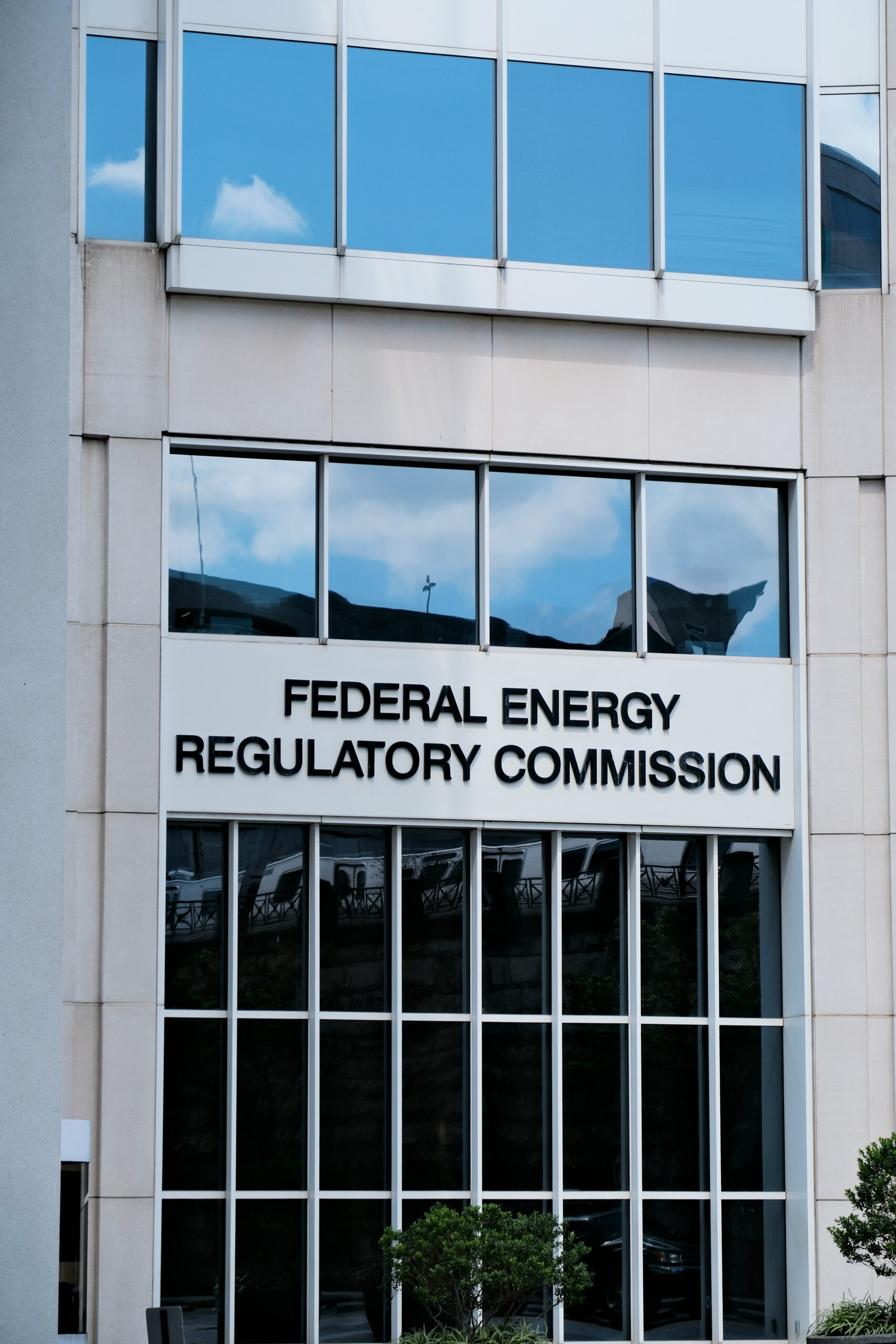
At the Federal Energy Regulatory Commission’s (“FERC” or the “Commission”) monthly open meeting on February 19, 2026, the Commission reaffirmed that it will not reinstate its ban on gas pipeline work during appeals.

At the Federal Energy Regulatory Commission’s (“FERC” or the “Commission”) monthly open meeting on February 19, 2026, the Commission reaffirmed that it will not reinstate its ban on gas pipeline work during appeals.
When the legendary writer John McPhee described a blind, over-the-shoulder basketball shot of the equally legendary Bill Bradley, he fixed on Bradley’s explanation of how he managed to score apparently without looking at the basket. Bradley simply said, “you develop a sense of where you are.” That ‘sense’ allowed him to accomplish his purpose with no immediate idea about how his goal would be affected by events around him.
Industry participants, watchers, and regulators might enquire where we are in the complex but seemingly endless process of modernizing the U.S. electric system. Is the current focus on streamlining regulatory approval processes for infrastructure development generally— and the siting and permitting of electric transmission in particular—a sign that it’s time for the easy stuff since the Rubik’s Cubes of access, planning, cost allocation, and accommodating new technology are approaching resolution? Will this in turn be followed by a surge in electric transmission grid expansion and market integration? Ironically, during the decade of debate over siting and permitting—while policymakers make corridor determinations, run steering committees, and manufacture procedural shortcuts—U.S. transmission construction has declined precipitously. Does this give confidence that we know where we are, where the grid is headed, and how the industry will get there?
At its latest open meeting on February 20, 2025, the Federal Energy Regulatory Commission (FERC) issued an order directing PJM Interconnection, L.L.C. (PJM) and the PJM Transmission Owners (PJM TOs) to demonstrate why the PJM Tariff’s lack of clear rules for co-location arrangements is acceptable or to explain the Tariff changes they would propose to address co-location issues (Show Cause Order). FERC’s Order is focused on the PJM region because there are several contested FERC proceedings involving co-location arrangements in PJM. However, FERC has indicated that it intends to act quickly on co-location arrangements across its jurisdiction. Accordingly, the results of the PJM Show Cause proceeding will likely serve as precedent in other RTO and non-RTO regions under FERC’s jurisdiction.
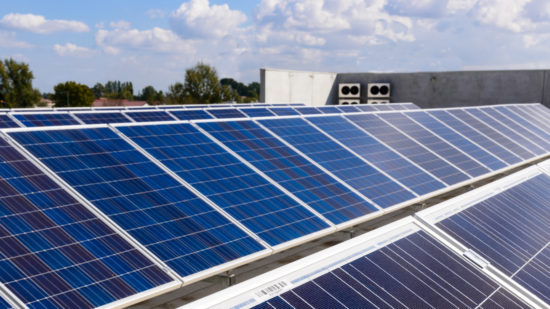
On February 14, 2023, the U.S. Court of Appeals for the D.C. Circuit upheld the Federal Energy Regulatory Commission’s (FERC) method for calculating the size of a small power production qualifying facility (QF) under PURPA as the net output or “send-out” capacity of the project. See Solar Energy Industries Association v. FERC, No. 21-1126 (D.C. Cir. 2023). To be a small power production QF under PURPA, a facility must use a qualified renewable resource, such as biomass, waste, wind, solar, or geothermal resources, to produce energy, and have a power production capacity that does not exceed 80 megawatts when considered with other facilities at the same site. FERC’s method of calculating the maximum size limitation was contested by Edison Electric Institute and Northwestern Energy (collectively, Utilities).
Bottom Line Up Front: The Department of Energy (DOE) will implement new cybersecurity programs to enhance energy sector resilience. DOE’s announcement coincides with the Senate Energy and Natural Resources Committee’s support for the DOE’s Office of Cybersecurity, Energy Security, and Emergency Response (CESER). Expect to see resilience to cyber attacks in future government procurement activities.
On March 18, 2021, CESER announced several new research programs designed to enhance the safety and resilience of the U.S. energy sector. The Trump administration established CESER to protect critical energy infrastructure by assisting oil, natural gas, and electricity industries secure their infrastructure. Currently, energy infrastructure faces threats not only from climate and natural hazards, but also evolving and increasing physical and cyber threats.
On Friday, May 1, 2020, President Trump issued a new Executive Order (the Bulk-Power Order) to prohibit transactions within the U.S. for the acquisition or installation of certain “bulk-power system electric equipment” which is sourced from foreign adversaries. In the Bulk-Power Order, President Trump expressed a determination that “the unrestricted foreign supply of bulk-power system
As published in a recent Husch Blackwell client alert, on April 26, 2017 the U.S. Department of Commerce (DOC) published a notice in the Federal Register setting out the hearing schedule for the investigation of steel imports that was announced on April 20, 2017. The scope of the investigation appears to be broad and could
On January 20, 2017, President Trump’s Chief of Staff, Reince Priebus, issued a memorandum to the heads of executive departments and agencies implementing a “regulatory freeze” on new regulations. The memorandum requires departments and agencies to: