
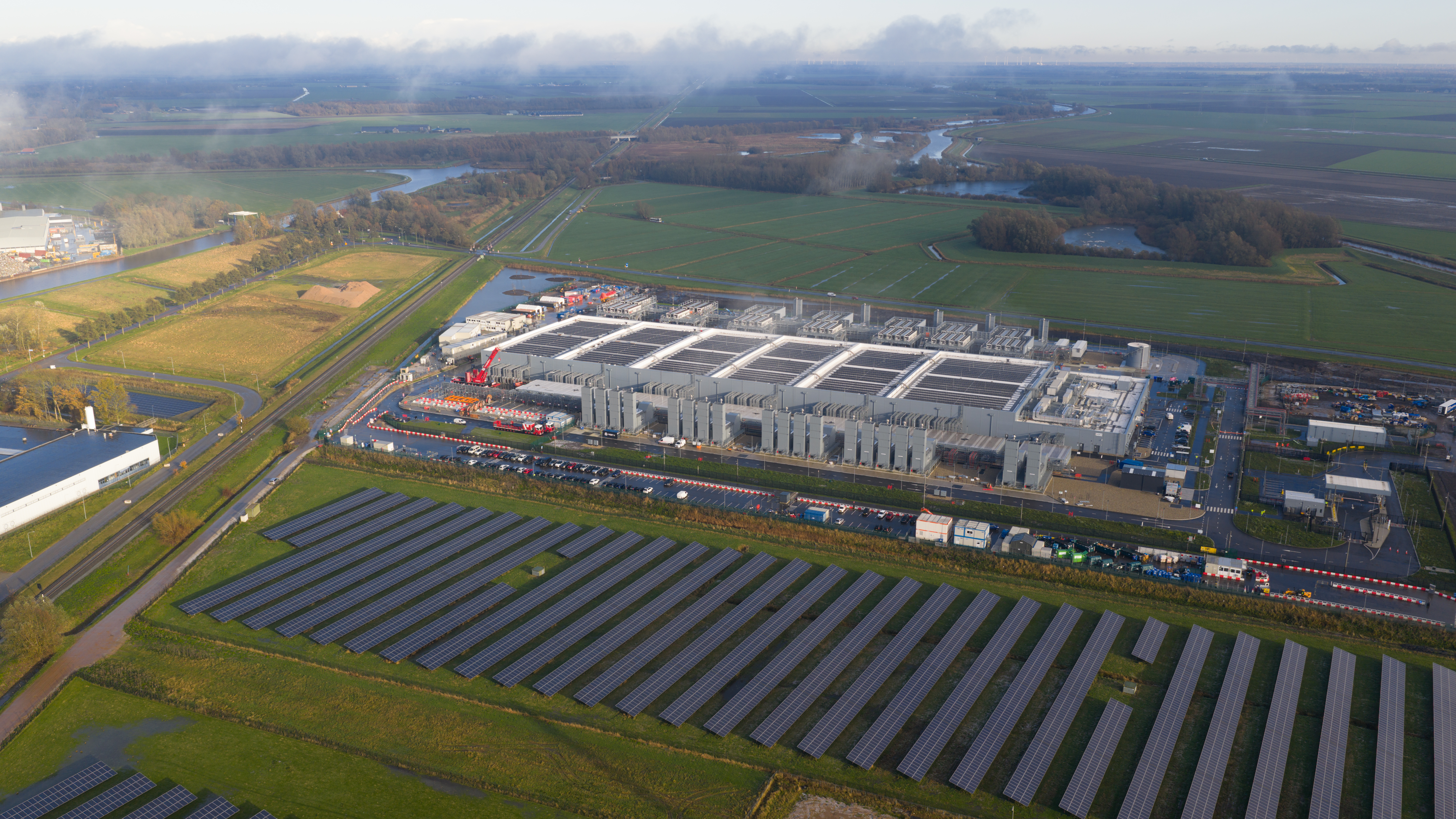
Texas presently sits at the center of the U.S. energy‑and‑digital‑infrastructure boom. As hyperscalers, AI platforms, crypto-currency miners, and cloud providers accelerate their build‑out of data‑center campuses, the demand for power in the Lone Star State has never been higher.
In this high-demand environment, renewable energy asset developers and operators are engaging in discussions with load-intensive facilities like data centers for the co-location of their projects. M&A transactions that involve the acquisition of renewable assets may now require the prospective buyer to diligence any co-located data center or engage in additional evaluation to consider the feasibility of developing a co-located data center at such project site.
The scope and level of diligence and specific points of inquiry are dependent on the current status and development timeline of the project. As with the development of any renewable asset, each step within the development process has the potential for delays and unanticipated costs, each of which can impact the overall economics of a transaction. This is notable in the co-location context when a renewable project faces congestion or curtailment issues impacting its ability to engage in ERCOT market sales, making a physical offtake arrangement particularly appealing from a revenue perspective. By better understanding the data center development and interconnection process, a buyer can better assess their risks and negotiate a better deal.
Below is an overview of some of the most common and critical issues to address during the due diligence process when a co-located data center load is involved in the proposed transaction, specifically within the ERCOT market.
Third Party Cooperation in the Diligence Process
Cooperation of a third-party data center developer is necessary to fully assess the feasibility of the project and the risk to the renewable asset. This, however, adds an additional level of complexity and its own challenges, given that the data center could have concerns about disclosing information due to confidentiality restrictions or other similar reservations (specifically because of its own relationships with third parties or investors. Coordinating diligence tasks can become more cumbersome because the addition of another party and most likely their own counsel, consultants, and advisors. Despite these challenges, a data center developer’s cooperation is necessary for a prospective buyer to fully evaluate the value of the transaction and the associated risks.
Site Control and Real Estate
In traditional renewable M&A transactions, real estate and site control issues are a core focus of acquisition diligence. The same is true when a renewable energy asset is co‑located with or expected to support a data center development. Real estate and site control issues can materially affect project certainty. Depending on the type of data center, a substantial footprint may be required, including requisite setbacks, access roads, and easements. It is possible that these necessary items may exceed or conflict with the land rights originally secured for the renewable facility. A prospective buyer should evaluate whether existing leases, options, easements, and title commitments adequately accommodate both current operations and anticipated future data center expansion. We additionally note that, pursuant to recent statutory developments discussed further below, the Texas Public Utility Commission (“PUCT”) is currently undergoing a rulemaking process to establish regulatory requirements for the interconnection of “large loads” with the ERCOT system – meaning consuming facilities having an aggregate peak demand of 75 MW or more at a single site (in our experience, most data centers meet this demand threshold). The proposed rule, still pending further PUCT review and approval, includes specific site control requirements at various stages of the load’s interconnection process. Diligence should include an assessment of whether any amendments or third‑party consents will be required, whether there will be a need for the acquisition of additional land, and eventually, whether the site control satisfies regulatory requirements. A thorough review of site control ensures that land rights align with the combined development plan and that real estate constraints do not undermine interconnection assumptions, offtake arrangements, or long‑term operability of the renewable asset post‑closing.
Regulatory and Interconnection Issues
Interconnection complexity and timelines are critical when negotiating deal terms and evaluating whether a proposed transaction can be successful. ERCOT’s interconnection processes, especially for large load customers, have not been uniform with experiences varying widely across different transmission service providers and distribution service providers. These inconsistencies in the past have directly affected transaction certainty and valuation.
Senate Bill 6, which establishes a regulatory framework for large loads (again, those greater than or equal to 75 MW) in ERCOT, was passed by the Texas Legislature and signed into law in 2025. SB 6 directed the PUCT to adopt uniform interconnection standards for large loads, and therefore its true impact depends on the results of the PUCT’s five active and ongoing rulemaking projects (Project 58481, Project 58479, Project 58480, Project 58482, and Project 58484). These projects address, among other things, standards and procedures for interconnection of large-loads as well as their cost-obligations.
SB 6 also introduced new oversight for net-metered behind‑the‑meter (BTM) or private use network (PUN) arrangements between new large loads and those generation resources which were “stand-alone” (meaning not registered as being part of a PUN with ERCOT) as of September 1, 2025. Certain new or expanded co‑located configurations now require PUCT (in addition to ERCOT) approval, depending on timing and structure. If a co-located large load and generation resource subject to these requirements fail to obtain the PUCT’s approval of their net metering arrangement, this could have debilitating impacts on the parties’ ability to perform under a BTM power purchase agreement where net metering is a key component of the offtake strategy.
In addition to the developments at the PUCT, ERCOT has been engaging the PUCT and stakeholders in developing a new large load interconnection process, called the “Batch Study process.” The proposal is a significant deviation from ERCOT’s prior interconnection process for large loads, which studied each large load request on an individual basis. Now, ERCOT would group large loads that meet certain stringent requirements into a single study to provide large load customers with study efficiency, consistency, transparency, and certainty while maintaining a system-wide focus on reliability. Batch Studies are currently proposed to take place twice a year, and ERCOT would have discretion to allocate a portion of the requested load capacity of each large load included in a batch study.
It would be an understatement to say that these events and pending processes have created uncertainty for project developers and the results of these regulatory activities can (and will) impact project timelines and financial projections. Diligence efforts must focus on not only assessing the status of interconnection efforts and whether they have been in compliance with existing laws and regulations, but also the constant monitoring and evaluation of (daily) regulatory and ERCOT developments and reassessment of development risks.
Procurement and Supply Matters
Data centers often rely on specialized, long‑lead equipment, which can be subject to supply‑chain bottlenecks, trade restrictions, and/or evolving domestic‑content requirements that can delay construction schedules and increase capital costs. Additionally, these factors could force redesigns that affect key project assumptions and energization timelines that negatively impact the financial projections of a renewable asset. Diligence efforts should assess contractual allocation of supply‑chain risk in order to evaluate exposure to cost escalation or availability constraints that could have an impact on the renewable project itself.
Construction Related Risks
Data centers can involve complex and large‑scale construction activities, including the utilization of specialized contractors and close coordination among civil, electrical, transmission, and interconnection workstreams. Construction delays and contractor disputes on the data center side can disrupt shared infrastructure development and affect access to both sites. These issues could impact critical milestones tied to energization of the data center site or offtake commitments for the renewable asset. A buyer should assess the status and feasibility of the data center’s construction plans and understand the allocation of risk tied to construction activities and how they may impair schedules, assumptions, and long‑term operational performance of the renewable asset.
Environmental Matters and Natural Resources
Co‑locating a data center with a renewable energy project can introduce additional environmental considerations that may not be present for the renewable facility alone. These may include increased resource use, changes to land use, and the need for additional permits or regulatory review. A buyer should evaluate whether existing environmental approvals and studies adequately cover the combined development and consider whether environmental compliance obligations or resource availability could affect development timelines, operating costs, or the long‑term viability of the project.
Community Sentiment
Data centers can generate significant scrutiny from the local community due to concerns about land use, water consumption, noise, transmission infrastructure, tax incentives, and perceived strain on local resources, even where the co-located renewable project itself has historically faced limited opposition. Negative community sentiment can translate into zoning delays, permitting challenges, litigation risk, or political pressure on local officials, any of which may disrupt development timelines and undermine the assumptions underlying valuation and closing conditions. Diligence should address the efforts of the developer to engage with the local community and assess any opposition that has emerged or is likely to emerge.
Offtake Agreements
When a renewable energy asset is intended to be co‑located with or serve a data center, the status and structure of offtake agreements are critical to transaction diligence. These offtake arrangements are closely tied to assumptions about load timing, energization milestones, and long‑term reliability. Diligence should focus on whether offtake agreements have been executed or are still under negotiation and whether any of their terms will be contingent upon future development milestones that could be missed. Key commercial terms in these agreements include pricing mechanics, delivery obligations, curtailment risk, termination rights, and remedies for delay. Diligence should evaluate these terms against the results of and conclusions from other diligence efforts, including those surrounding construction timelines and regulatory developments.
Conclusion
As data center demand reshapes the Texas power landscape, co‑location arrangements are becoming a material driver of value and risk in renewable M&A transactions. In ERCOT, where regulatory frameworks and the interconnection processes are evolving in real time, traditional diligence is no longer sufficient. Buyers and sellers who prioritize diligence efforts that help them evaluate the features and risks of a co‑located load, from site control and interconnection to construction, offtake, and third‑party cooperation, will be much better positioned to assess risk accurately, avoid unwanted surprises, and structure transactions in a way that protects them from development through operation.