
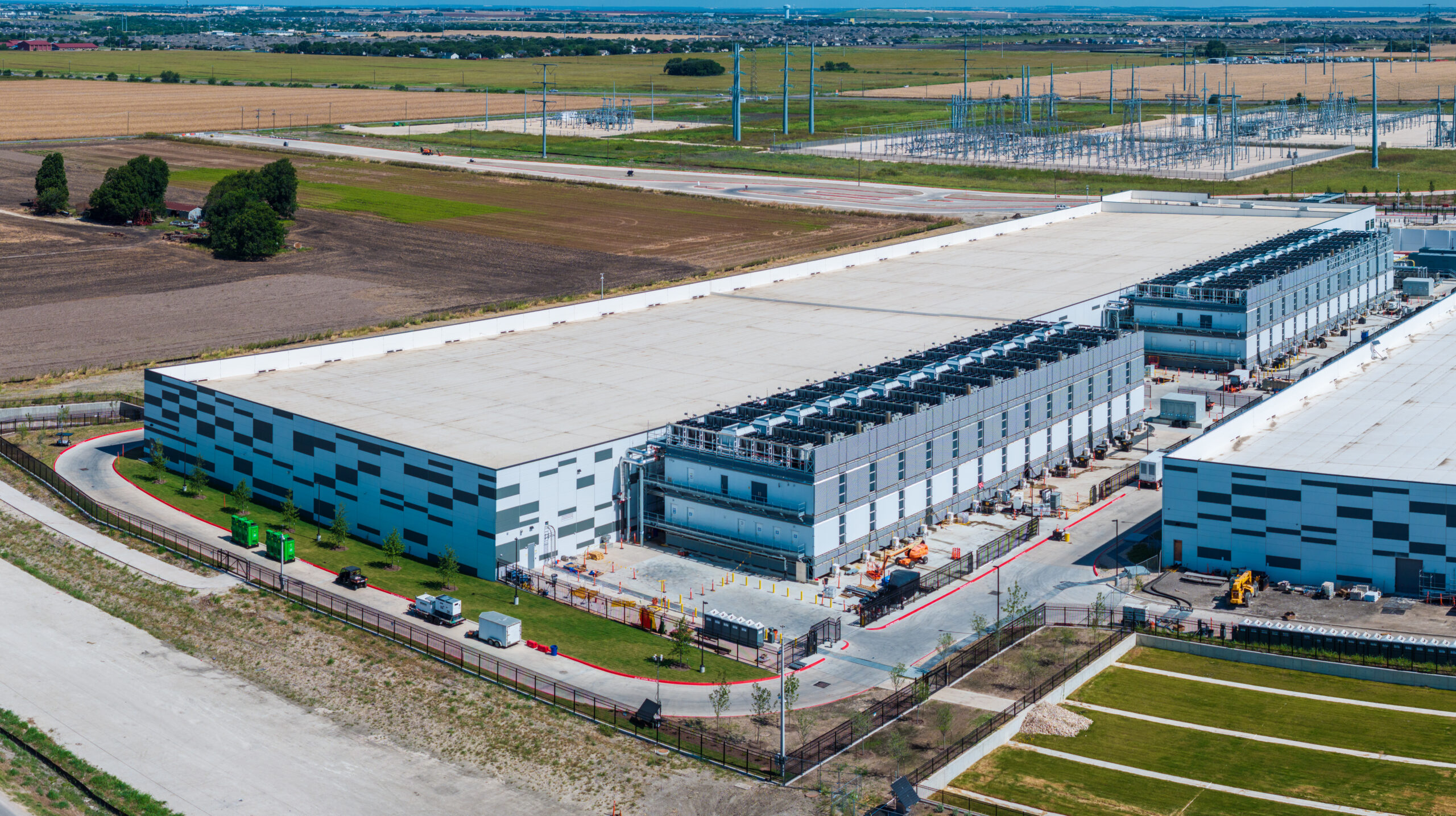
Data centers raise difficult questions about power demand, resource use, and surrounding land uses, with particular significance for host communities. They also provide physical infrastructure supporting everyday services and create opportunities for investment and economic growth. Prompt, practical guidance from federal and state policymakers could address those concerns without allowing uncertainty to become a barrier to responsible development. Recent Senate action on permitting-reform legislation with provisions addressing data centers brings the question into focus: How can coordinated governmental policy support data-center development while equipping host communities to evaluate local impacts? Lessons from earlier infrastructure development offer a useful starting point that supports meaningful local participation and helps host communities and developers shape suitable and responsible projects together.
Hoover Dam provides an example of governmental coordination over complex infrastructure with substantial economic potential but also competing demands on natural resources. Its development followed years of debate over engineering feasibility, economics, and how Colorado River water would be shared among states, while promising benefits through electricity generation, irrigation, job creation, and flood control.[1] An interstate agreement and federal participation helped make the project possible.[2] Hoover Dam subsequently became “a model for further federal involvement in regional-scale multipurpose dam projects.”[3] The lesson for data centers is not to replicate Hoover Dam’s development model, but to recognize that challenges extending beyond individual sites can benefit from broader government coordination.
Wind development offers a more recent illustration of how broader infrastructure objectives meet local land-use decisions. For many developers, treating landowners as project partners begins with listening to their priorities, explaining project needs and trade-offs, and considering their input. Those developers often find that giving landowners a meaningful role in shaping a project, rather than simply seeking approval of a finished plan, can earn goodwill and build trust. Engagement with surrounding residents is also important to understanding concerns and identifying opportunities for local benefit. These conversations will not eliminate disagreement, but they can help developers and communities work toward solutions responsive to local needs. Policymakers can also draw on these considerations when developing data-center guidance: a common framework can support meaningful collaboration.
These examples point to complementary considerations: broader governmental coordination and informed local participation. On November 19, 2026, the Senate passed H.R. 2347, as amended, containing the Bipartisan American Affordability and Jobs Act of 2026.[4] The legislation would direct the Secretary of Energy to establish a program providing state, local, and Tribal governments, upon request, with objective support “regarding the potential energy, water, infrastructure, economic, and other community impacts associated with computational load site development.”[5] The proposal would also require federal development of a “Data Center Community Toolkit” containing model questions, definitions, case studies, and related guidance.[6] This assistance could support locally informed evaluation without prescribing project outcomes.[7] For data center developers, coordination can provide a common foundation for communities and developers to address individual project needs together.
Treating data centers as modern infrastructure allows policymakers to draw on earlier approaches to complex development, while recognizing that those approaches do not supply a turnkey framework. Hoover Dam and wind development are only two examples of infrastructure implementation that can guide that effort. The proposed federal assistance program offers a timely example of how coordinated guidance and resources could support locally informed decisions. Common development experience reinforces the importance of pairing that support with meaningful community participation. A shared starting point can clarify expectations while leaving room for communities and developers to address site-specific needs together, potentially creating a more predictable path for suitable projects, not identical outcomes everywhere.
[1] See Nevada and Arizona: Hoover Dam, Nat’l Park Serv. (Nov. 7, 2018), https://www.nps.gov/articles/nevada-and-arizona-hoover-dam.htm; Gabriel Lee, The Big Dam Era, Energy History, https://energyhistory.yale.edu/the-big-dam-era/ (last visited Nov. 17, 2026).
[2] Gabriel Lee, The Big Dam Era, Energy History, https://energyhistory.yale.edu/the-big-dam-era/ (last visited Nov. 17, 2026).
[3] Id.
[4] U.S. Senate Daily Press Gallery, Thursday, November 19, 2026 (Nov. 19, 2026), https://www.dailypress.senate.gov/thursday-november-19-2026/.
[5] See S. Amend. 6883 to H.R. 2347, 119th Cong. § 2117 (2026).
[6] Id. § 2117(c).
[7] See id. § 2117(e)(2), (f)(1).