
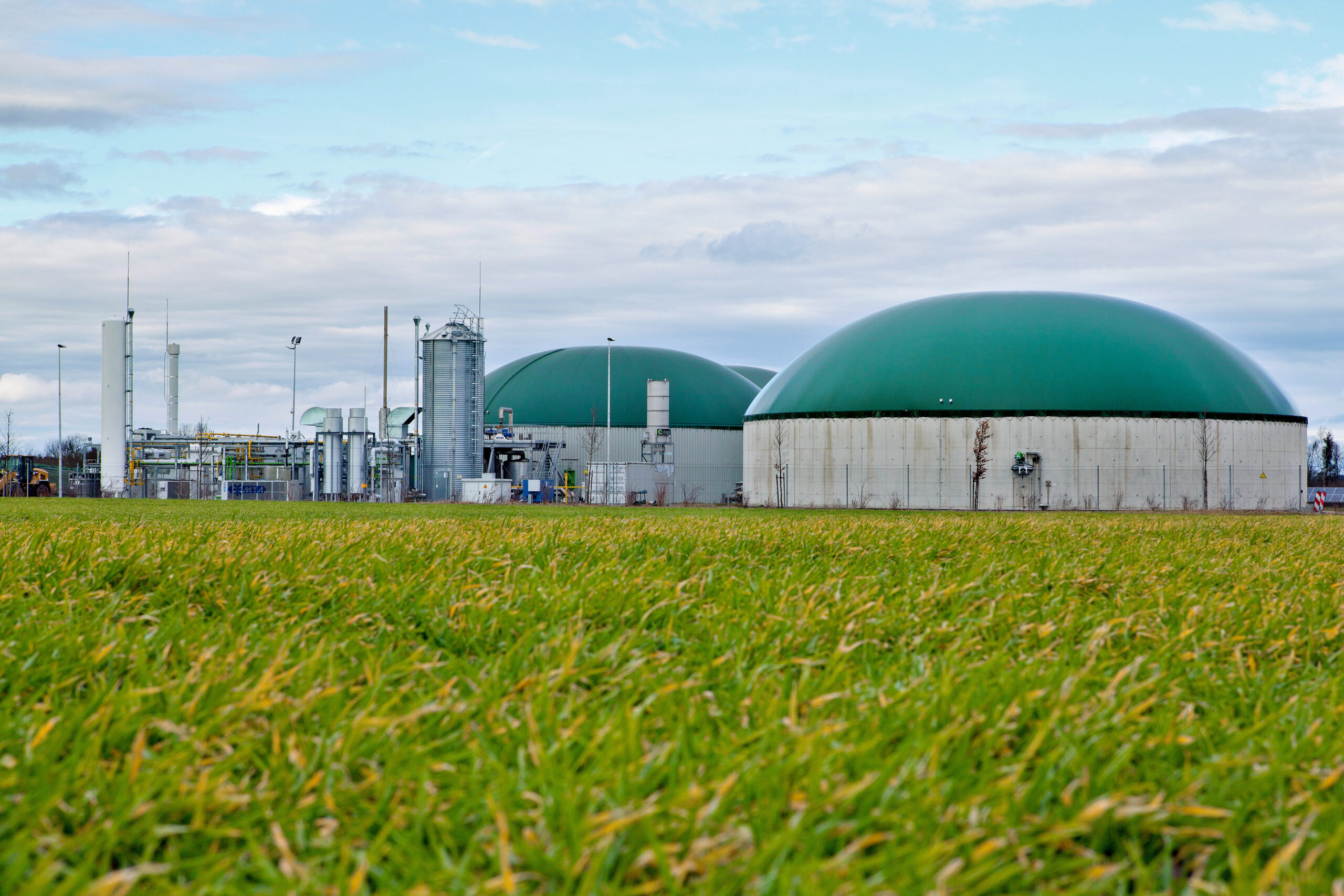
For years, the Investment Tax Credit (ITC) under Section 48 and the Production Tax Credit (PTC) under Section 45 of the Internal Revenue Code provided the federal tax incentive foundation for biogas electricity projects.
Those legacy credits were technology-specific, and their availability for new projects has given way to two successor regimes enacted under the Inflation Reduction Act: Section 48E, a technology-neutral clean electricity investment tax credit, and Section 45Y, a technology-neutral clean electricity production tax credit. Both are available to facilities that generate electricity from combusted or gasified biogas, provided the facility demonstrates a greenhouse gas (GHG) emissions rate of zero or less on a lifecycle basis. The timing is consequential, as artificial intelligence and cloud computing drive unprecedented data center electricity demand that biogas-to-electricity projects are uniquely positioned to meet.
What Changed — and Why It Matters for Biogas Electricity
Under the legacy framework, Section 48 provided an ITC for “qualified biogas property,” including anaerobic digesters and gas conditioning equipment, while Section 45 provided a per-kilowatt-hour PTC for electricity from qualifying renewable sources. Neither was technology-neutral, and neither scaled credit value based on lifecycle carbon intensity. The Inflation Reduction Act replaced them with Sections 48E and 45Y, both available to qualified facilities placed in service after December 31, 2024. Credit availability phases out based on the applicable year—defined as calendar year 2032—and placed-in-service dates thereafter, subject to the modifications described below. Eligibility turns on a single metric: the facility must have a GHG emissions rate of zero or less, determined through a lifecycle analysis accounting for alternative fates of the feedstock. For biogas facilities—including those powered by landfill gas, wastewater biogas, or methane captured from manure digesters—this framework is favorable, because capturing and combusting methane that would otherwise escape into the atmosphere may result in a net-negative lifecycle emissions profile.
Understanding the Section 48E and 45Y Credit Structure
Taxpayers must elect one credit per facility. Section 48E provides a base ITC of six percent (6%), increasing to thirty percent (30%) if prevailing wage and apprenticeship (PWA) requirements are satisfied or if the facility has a net output of less than one megawatt, with bonus adders for projects in designated census tracts or using sufficient domestically produced components. Section 45Y provides a base PTC of $0.003 per kilowatt-hour, increasing to $0.015 per kilowatt-hour if PWA requirements are met, subject to annual inflation adjustment. Critically, unlike the former Section 48, Section 48E limits the qualifying asset base to power generation equipment only—excluding ancillary components such as anaerobic digesters. This narrowing may make the Section 45Y PTC more attractive for projects with substantial digester infrastructure.
Developers should note recent modifications under the One Big Beautiful Bill Act (OBBBA). The OBBBA added new termination provisions under Sections 45Y(d)(4) and 48E(e)(4) that disallow the credits for wind and solar facilities placed in service after December 31, 2027, where construction begins after the date that is twelve months after enactment (i.e., after approximately July 4, 2026). Biogas and other non-wind, non-solar qualified facilities are unaffected by this termination and remain subject to the pre-existing IRA phaseout mechanism, under which credits phase out based on the applicable year of 2032 and placed-in-service dates thereafter—a meaningful policy signal favoring continued biogas development. Taxpayers must maintain documentation regarding biomass-derived feedstock sources to support lifecycle GHG emissions verification.
Data Centers: A Transformative Demand Signal for Biogas Electricity
The transition to electricity-focused tax credits arrives at a moment of extraordinary demand by data centers. Biogas-to-electricity is uniquely suited to meet this demand. Unlike solar and wind, biogas engines operate continuously. These projects can directly power the data centers, bypassing grid interconnection timelines and enabling deployment in two to four years. However, data centers need not be co-located with a digester to benefit. Through virtual power purchase agreements and grid-connected systems, electricity from multiple biogas sites can be aggregated and matched to a facility’s consumption regardless of location. Corporate buyers can contract for aggregated biogas power virtually, receiving associated environmental attributes such as renewable energy credits without requiring direct physical delivery.
The Bottom Line
The expiration of the legacy Section 48 ITC and Section 45 PTC for biogas is not the end of the road—it is a redirection. Sections 48E and 45Y establish a technology-neutral, performance-based framework under which biogas projects may qualify based on their lifecycle emissions profile, dispatchability, and use of waste-derived feedstocks. As data center electricity demand continues to grow, developers and investors should evaluate how the current credit structure applies to biogas-to-electricity projects and consider the relevant tax, regulatory, and commercial factors in their planning.
This article is intended for general informational purposes only and does not constitute legal or tax advice. Please consult a Husch Blackwell attorney regarding your specific circumstances.