
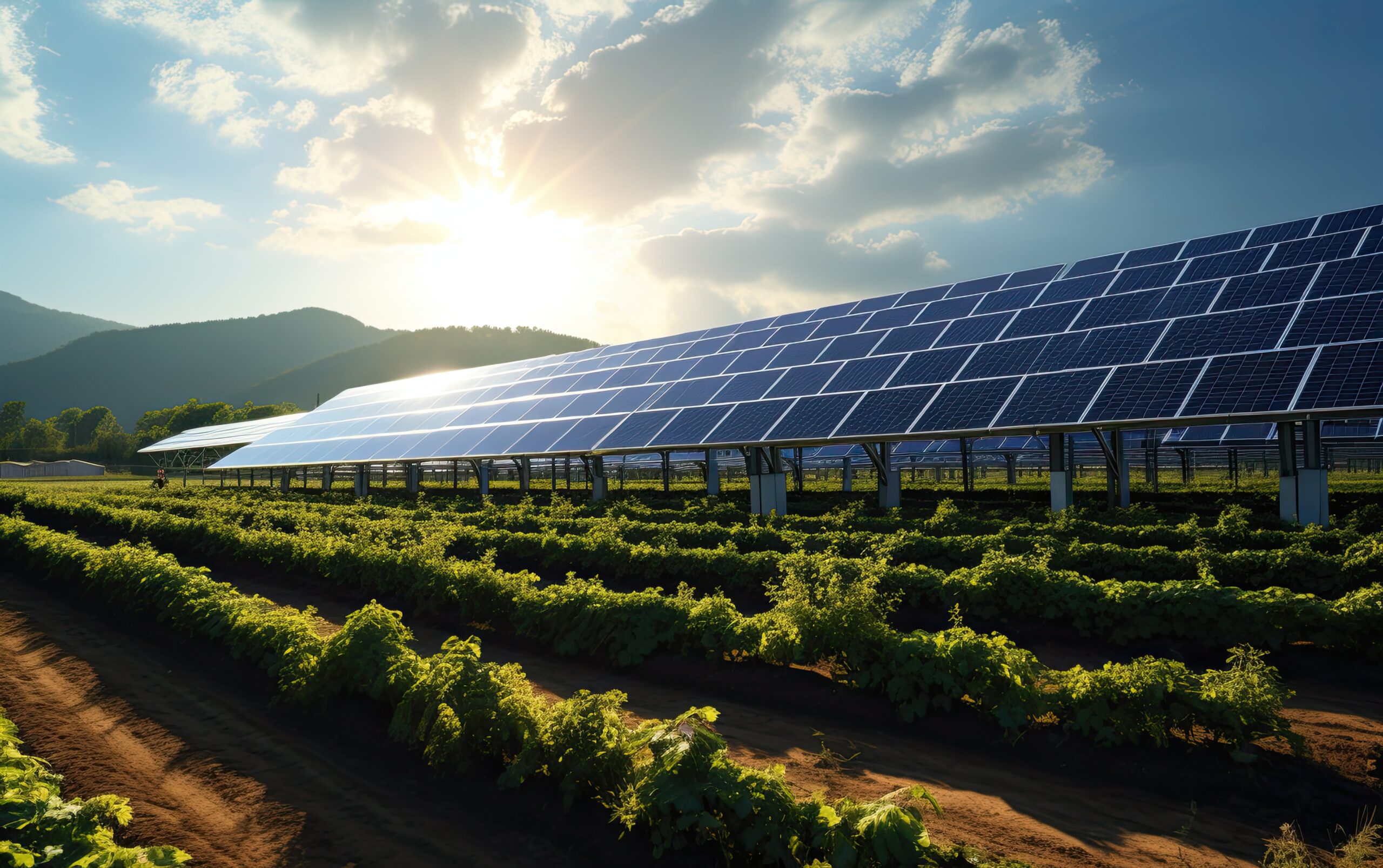
Solar developers contend with a wide array of challenges, from competing for viable project sites to combatting disinformation surrounding the expansion of clean energy development. With demand for energy rapidly growing across the nation, considering a full suite of project designs allows developers to put their best foot forward when collaborating with local stakeholders.
Each project presents its own unique considerations, and though not applicable to every project or region, agrivoltaics can provide solar developers with the ability to bring significant generating capacity online while partnering with local stakeholders to preserve traditional regional land uses and ways of life. By nature, successful agrivoltaics projects require a conducive policy environment and collaboration on site design, and successful operation requires well drafted, clear site control documents that allocate risk among the various parties using the project site throughout its lifetime.
This article briefly explores a variety of agrivoltaics approaches and outlines key drafting considerations for site control documents in agrivoltaics project development.
Agrivoltaics Approaches
“Agrivoltaics” is a broad term that includes various project design approaches that position agricultural land uses and the installation of solar projects as complements to one another by using tracking mount systems, elevated mounting systems, panel spacing patterns, or a combination thereof.
Tracking mount systems are commonly used to maximize insolation time by allowing panels to track the sun. These mount movement patterns can be optimized to control time and intensity of sunlight for both the panels and crops planted underneath. Elevated mounts can allow room for passage beneath the panels by grazing animals or crop harvesters. Further, panel spacing patterns can be designed to ensure the viability of crops or natural vegetation requiring more direct sunlight. Beyond the increase in land productivity enjoyed by the landowner, these design approaches can provide cooling effects for the panels due to the microclimate created by their shade and the plants beneath, or decreased site maintenance costs due to vegetation management performed by grazing animals or farmers operating on the project site. Proper site design for a particular project hinges on collaboration between local agricultural experts, local policymakers, and the developer’s team.
Site Control Considerations
In traditional solar project development, the terms outlined in site control documents are essential for maintaining regulatory compliance, ensuring project safety, managing, and allocating risks, and securing project financing. With the integration of agrivoltaics, these factors become even more significant due to the prolonged involvement of third-party agricultural operators within the project area. Beyond the usual ground leases, easements, and licenses, solar developers operating in the agrivoltaics space should expect to negotiate and enter into shared facilities agreements, grazing leases, and/or farming leases with the agricultural partners that will be operating within the same boundaries. Regardless of the agreement structure, it is imperative that developers coordinate these arrangements with landowners and agricultural partners to comprehensively address land use considerations and risk allocation. Key drafting priorities include complying with applicable laws, aligning the terms and extension structures of the agreements, structuring access rights and schedules, and allocating risks posed by the respective operations, financing-friendly terms, and dispute resolution provisions.
Applicable Laws
Rural communities and the local governments that serve them have a vested interest in ensuring that land and lifestyle are respected by developers constructing solar projects in the region. If operating in an area where local government has enabled agrivoltaics or requires an agrivoltaics model as a condition to permitting, developers should ensure that their legal counsel reviews applicable ordinances, assists with negotiating potential development agreements, and incorporates terms or standards required by law into the project’s site control documents.
Pairing established land use with the installation of generating capacity allows for the addition (or expansion) of the energy industry in the region without sacrificing the agricultural industry or the community that sustains it. However, that vision is only possible if the project remains operational and compliant with all local, state, and federal laws governing it.
Agreement Term Lengths
Agrivoltaics creates a mutually beneficial relationship only if both sides keep their operations active. If a project requires annual grazing as part of its permit, the developer should consider matching the term of any agreements with a rancher, shepherd, or livestock company to the term of the ground lease with the landowner. If the agricultural partners do not wish to commit for the duration needed, the developer should consider proposing a shorter term for the grazing lease with termination or expiration contingent on the developer entering into a new grazing lease or the agricultural partner finding an assignee to carry out the obligations. Arrangements that contemplate multiple partners for grazing or farming leases can require conforming edits to the ground lease with the landowner. This ensures that the developer has the authority and right to grant all such leases and licenses necessary to enable agrivoltaic use with multiple agricultural partners.
Access Issues
With multiple parties requiring access to the site, agrivoltaics projects present both the possibility of conflict and the opportunity for collaborative management of operational concerns. Prescribed or predictable activities such as milestone maintenance and diagnostics that may be required for equipment warranties should be explicitly scheduled to eliminate or minimize disruption to harvest season or grazing schedules. Emergency issues may arise, requiring agricultural partners, the landowner, or the developer’s operations and maintenance providers to enter the project site quickly and address the problem. Whether an event is expected or is an emergency, the developer should ensure that the parties have clearly defined notice procedures and access rights detailed within the ground lease, shared facilities agreement(s), or other applicable site control documents.
Operational Risks
Developers understand the risks of building solar projects, but incorporating additional land uses under solar panels complicates site control documents, indemnification, insurance, and operations. Effective collaboration ensures all industry-specific risks are addressed during drafting. Farming equipment and livestock can impact infrastructure, just as project activities may threaten animals, irrigation systems, or crops. Clear, mutually beneficial procedures help minimize risks to all parties’ assets.
Financing Provisions
Project finance terms are common in energy lease and easement documents, but they may not be standard in forms of grazing leases, farming leases, or other licenses necessary to enable the agricultural use required for agrivoltaics. Ensuring that all agreements affecting project lands contain provisions for estoppels, assumption of obligations by lenders, and extended cure periods can ease concerns for lenders and simplify the project financing process for all parties.
Dispute Resolutions
Despite thorough planning, established policies, and comprehensive procedures, parties involved in agrivoltaics projects may still experience conflicts during joint operations. It is essential that the parties outline clear dispute resolution processes within the various site control agreements. Determining what sort of relief is available, establishing methods of calculation for damages to infrastructure, crops, or livestock, and securing a neutral venue are all important considerations for handling conflict in multi-party, multi-agreement projects like agrivoltaics.
Conclusion
Agrivoltaics, once proposed as a purely academic concept to address the potential conflict between large scale solar development and agricultural land use, has become a legitimate multipurpose tool that can increase land productivity and provide for the growing energy needs of the present without removing vital agricultural land from production. Successful projects require collaboration and precise planning. When agrivoltaics are feasible, solar developers should consult legal experts to navigate complex transactions and support mutually beneficial outcomes.
Please reach out to Husch Blackwell’s Energy & Natural Resources team with any inquiries.